


Introduction — What Makes Caricatronchi 2025 a Sensation?
In 2025, Caricatronchi has taken the art world by storm, merging AI creativity tools with human imagination to create a modern caricature style that redefines how we see faces, humor, and identity. This digital portrait trend fuses satire with futuristic design, turning every exaggerated line into social commentary and emotion.
Artists around the world are exploring Caricatronchi art style as a form of digital self-expression, blending humor, surrealism, and technology in unexpected ways. More than a trend, it’s a cultural movement showing how modern creativity transforms ordinary portraits into electrifying reflections of human personality and digital identity.
What Is Caricatronchi and Why Everyone’s Talking About It
Caricatronchi fuses classic modern caricature with the energy of digital tools, producing art that feels familiar yet strangely new. It combines abstract avatar design, comedic exaggeration, and emotional self-portrait elements to reflect inner worlds rather than just outer likenesses.
People talk about it because the technology now supports it: AI creativity tools, generative portrait engines, and graphic tablets all make production accessible. On the cultural side, this style taps into digital identity expression, offering a visual language for the fragmented self. As you scroll social feeds, these works grab you not just because they’re loud—but because they whisper something real.
The Evolution — From Classical Caricature to Caricatronchi
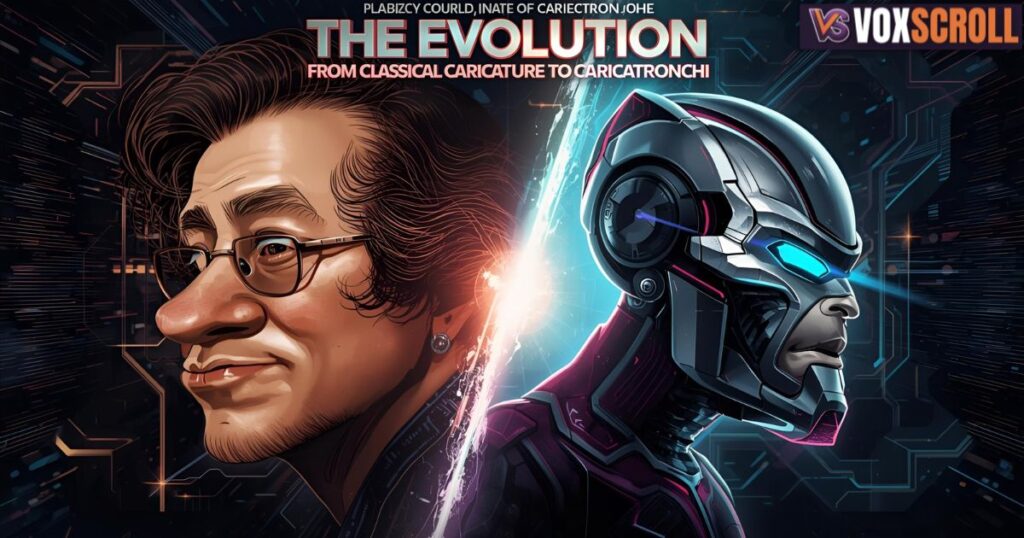
The roots of this revolution trace back to caricature history. Artists like James Gillray and Honoré Daumier exaggerated features for satire and commentary.Then came cartoons, cross-media humor, cartoon art evolution, and digital illustration. Modern artists lean into expressive portrait drawing with color bursting, textures shifting, and styles borrowing from pop culture.
What happens with Caricatronchi is a leap: it retains the humor and exaggeration of caricature, adds the satirical art style of cartoons and graphic media, and layers in technology to form sprites of identity. It’s a hybrid that speaks to our media-rich age.
Read Also: Edivawer 2025: The Ultimate Revolution in Digital Innovation & Human Identity
The Surreal Roots and Digital Aesthetics Behind It
Delving deeper, Caricatronchi draws on retro-futurism aesthetic with mesmerizing neon palettes, creative technology in art, and dream-logic distortions. The genre also inherits from surreal digital illustration where forms are bent, layers broken, and meaning hidden behind fewer lines.
Artists often invoke mixed media art, digital glitch textures, and interactive art experiences that invite the viewer into the scene. In doing so, they challenge traditional aesthetics of the face or figure and instead explore identity through distortion—a face might fragment into shards, wires, neon pulses. This practice becomes a visual metaphor for online living.
Distinct Visual Features That Make Caricatronchi Stand Out
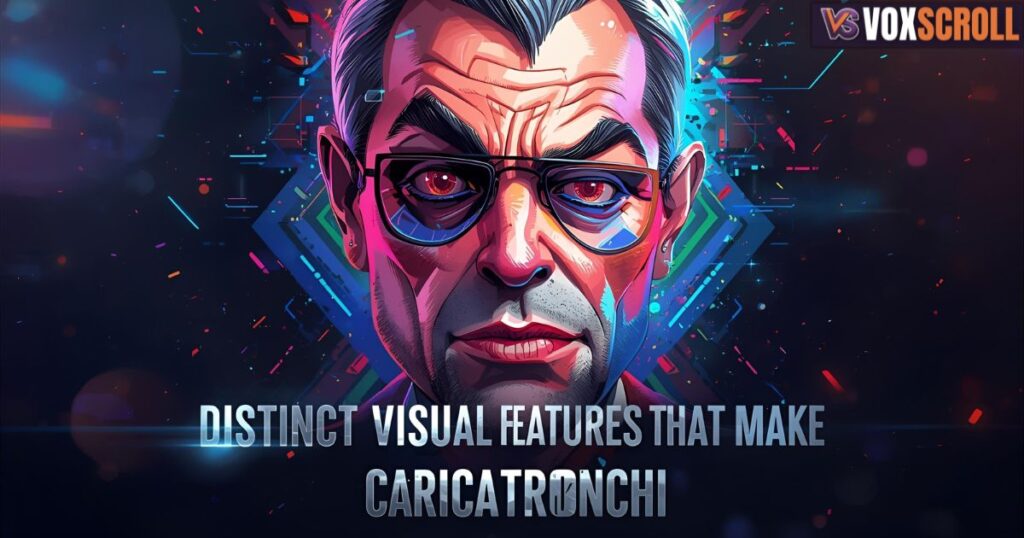
When you look at a Caricatronchi piece you often see oversized eyes, elongated limbs, or distorted torsos. These are intentional tools of artistic distortion. Unlike classic caricatures that exaggerate a recognizable feature, this style mixes expressive line art, digital augmentation, and symbolic objects—clocks, wires, dream-scapes—to tell emotional stories.
Its palette differs too: rather than soft pastels or simple ink, you’ll find vibrant digital illustration, glitch overlays, neon edges, “flat” colors that pop from your screen. The medium is mostly digital but often feels tactile, merging avatar aesthetics with painterly feel. This fusion belongs to the wider new media creativity caricature and cartoon fusion movement.
Why Caricatronchi Is Exploding in 2025
Several forces align to push this style into visibility. First, the digital identity crisis we face: filtered selfies, avatars, curated lives. Caricatronchi offers a counter-narrative: imperfect, expressive, emotional. In other words, it’s about emotional expression art more than perfection.
Secondly, as customization becomes central—think profile pictures, NFTs, personalized branding—this style thrives on personalization in art. You don’t just own an image, you own a story, a face that’s you but more. Thirdly, we’re in an era where art therapy through AI is plausible: artists and hobbyists use these tools for introspection as much as for aesthetics.
Digital Identity Crisis and Online Self-Expression
The virtual self often masks discomfort, anxiety, and longing. Caricatronchi lets creators expose those layers visually. The visual distortions become metaphors for hidden feelings or fragmented identity. When a portrait shows a cracked face or glitchy eyes, it’s really reflecting how we view ourselves in the digital mirror.
The Rise of Customization Culture
Today, brands and individuals seek visuals that stand out. The usual selfie won’t cut it. Caricatronchi answers the call: bold, personal, shareable. It appeals to influencers, game avatars, NFT collectors—anyone wanting unique visual branding. The style resonates because it’s tailor-made for the age of identity economy.
Art Therapy and Emotional Catharsis in Digital Form
Creating these portraits can be more than fun—it can be healing. As artists manipulate shapes and colors to express inner turmoil or joy, they engage in modern self-representation. That sense of visual release—seeing your emotional world stylized and externalized—ties into hybrid artistic creation and suggests Caricatronchi could have a role in wellness, not just aesthetics.
The Creative Process — How Caricatronchi Comes to Life
The journey from blank canvas to finished Caricatronchi piece involves technology, intuition, and artistry. Using digital caricature process tools, an artist imagines distortion, then executes using software or even AI-assisted workflows. The result becomes an expression of self in high resolution.
Manual Digital Drawing
Starting with a tablet or stylus, artists sketch a face or figure. They identify an expressive trait—arched brow, wide grin—and exaggerate. They layer color, texture, media transformation through art, and gradually the piece becomes narrative rather than mere portrait. The key lies in balancing exaggeration with recognizable identity.
AI + Human Editing Workflow
Here, artists use AI platforms to generate a base image, then refine manually with brush-work and effects. This blend of AI-powered art creation and human touch enables speed, complexity, and nuance. Many Caricatronchi creators use this hybrid method to explore styles that might be too time-intensive manually.
Prompt-Driven AI Generation
In some cases the process begins with a text prompt like “fragmented face neon glitch oversized eyes surreal digital portrait.” The AI produces several versions and the artist picks or edits variations. This practice leverages generative portrait tools and reflects how the genre is deeply tied to modern tool-chains rather than only traditional methods.
Caricatronchi vs Traditional Caricature — A Visual Showdown
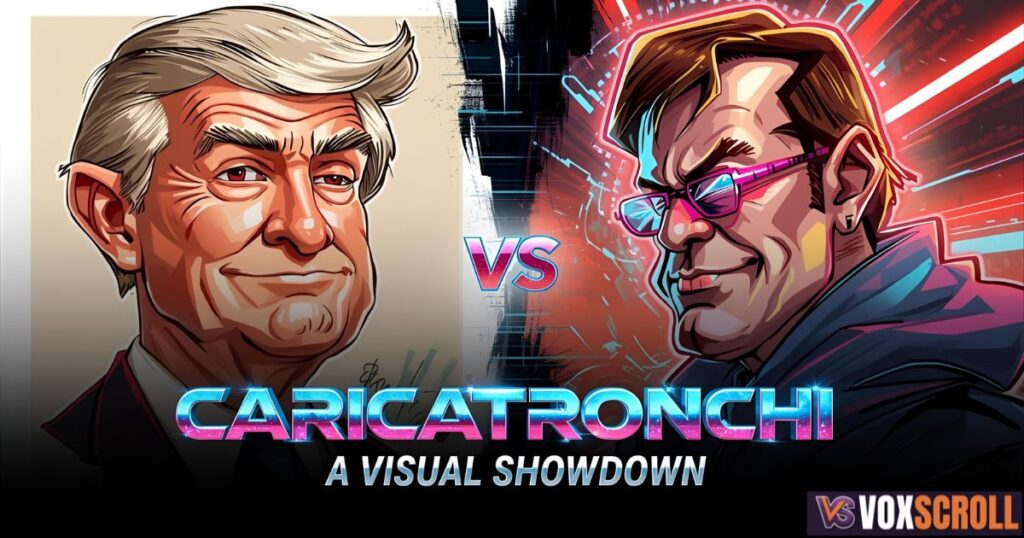
When you compare Caricatronchi to a classic caricature the differences become sharp. Traditional caricature leans heavily on humor, recognition, and satire—cartoon art evolution at its simplest. It exaggerates a person’s features for comedic or critical effect.
Caricatronchi, in contrast, integrates digital media, emotional narrative, and art as social reflection. It may exaggerate but also distort, fragment, layer, and symbolize. The result isn’t just a funny face—it’s a reflection of identity, culture, and technology. This makes it ideal for visual branding with caricature, media art contexts, and beyond.
Read Also: Trucofax: 10 Powerful Ways to Transform Your Digital Workflow in 2025
The Role of Social Media in Its Global Boom
Platforms like Instagram, TikTok, Behance and Reddit have given Caricatronchi immediate exposure. Artists share commissions, works-in-progress, tutorial reels, and these circulate fast. The style thrives in the ecosystem of trending hashtags and share-friendly formats.
Because of that, the genre enjoys social media art growth and global art exposure. A creator in New York can influence another in Los Angeles or Seoul in hours. Visual platforms amplify not just the art but the artists, the brand, and the community. What once would be confined to galleries now lives in your feed.
The Artists Powering the Caricatronchi Movement
Behind every bold Caricatronchi artwork sits an artist wielding not just a tablet but cultural insight. Some blend fine-art training with digital tools; others come from street art or meme backgrounds. Their styles vary—some minimal, some maximal, all deeply personal. The movement emphasizes authentic creative voices over mass-produced tropes.
These artists often reference cultural storytelling, memes, global influences, and tech trends. Their work is not just pretty—it’s tuned into cross-platform digital art ecosystems and experimental formats. They usher in what you might call the “avant-avatar”: self-representation, brand identity, and experience all in one.
How to Create Your Own Caricatronchi (Step-by-Step Guide)
If you’re curious about making your own Caricatronchi piece, the path is open and rewarding. Below you’ll find a flow you can follow; each step builds on the last so you can arrive at something bold, personal, and expressive. These instructions reflect the digital storytelling trend and aim to help you tap into Caricatronchi educational potential.
1. Observe and Exaggerate Human Features
Begin by studying your subject—maybe it’s you, a friend, or a fictional character. Notice what stands out: expressive eyes, crooked smile, strong posture. Then exaggerate—make the trait larger, smaller, bent—but keep identity intact. This exercise builds intuition for character exaggeration in design.
2. Sketch or Generate Base Design
Use pencil on paper, or open a digital canvas. Layout your figure with exaggerated proportions. Alternatively, you might input a prompt to an AI tool and generate several base images. This step links to AI-assisted sketching and helps you explore variations without committing right away.
3. Add Humor and Symbolism
Now you inject story—what does the subject feel? What symbols tell that story? Perhaps wires wrapping the head for “connected mind,” or a cracked mirror for “identity split.” You’re doing more than caricature; you’re telling through image. This exemplifies emotional digital art at work.
4. Experiment with Colors and Layers
Choose bold palettes—neons, pastel dashes, glitch overlays. Use layers for texture, shadows, reflections. In digital software you can play with blending modes, glitch effects, or collage. Here the genre’s tie to media art innovation becomes clear: the technique is as dynamic as the concept.
5. Digitize, Edit, and Enhance
If you began on paper, scan and import. If digital, fine-tune details: crisp lines, depth, shading, background context. Maybe animate or add subtle movement for digital display. You’ll combine edits with your original vision to produce a polished piece ready for sharing. This stage uses artist digital tools and reinforces your voice.
6. Share and Engage with Communities
Post to Instagram, TikTok, art forums. Use tags like #Caricatronchi #DigitalArt. Ask for feedback, join challenges, collaborate. Your piece becomes part of a wider movement—an interactive cycle of interactive art marketing and community growth. Your voice enters the network.
The Social and Cultural Impact of Caricatronchi
This art form doesn’t exist in a vacuum; it engages with society, culture, and identity. By presenting distorted faces and hybrid forms, Caricatronchi invites viewers to think about body image, digital selves, and how we choose to present ourselves. It’s a medium of cultural humor and social commentary art simultaneously.
Globally the form bridges context: an American digital artist can reference memes just as much as a Korean illustrator uses K-pop iconography. This cross-cultural richness shows how Caricatronchi is more about creative empowerment than only spectacle. It gives voice to identity, to community, to difference.
Challenges, Ethics, and Criticism in Caricatronchi Art
With innovation come questions. Some argue that using AI caricature tools threatens authenticity. Others note that distortion can slip into stereotype. The question of who owns the artwork when AI is involved becomes central—an era of new media creativity caricature and cartoon fusion brings new ethical frontiers.
Additionally, oversaturation is real. If every profile picture becomes a Caricatronchi, the novelty fades. Artists must guard their voice, avoid generic templates, maintain creative technology in art but also preserve meaning. When done right, critique becomes part of the art itself: how we see and are seen.
The Future of Caricatronchi — Where the Trend Is Headed Next
Looking ahead, imagine Caricatronchi extending into AR/VR, where your digital avatar lives in immersive spaces, morphing with the viewer’s motion. The style may move from static art into interactive art experiences. The blockchain could host Caricatronchi as NFT caricature art, each unique piece owning its identity and story.
The discourse around identity, representation, and digital self-hood will keep pushing the genre. With evolving tools, the tech-driven art evolution will bring more accessible, personalized, and emotionally rich pieces. As demand grows for unique visuals, Caricatronchi stands to become a staple of 21st-century culture rather than a fleeting trend.
Final Thoughts — Why Caricatronchi 2025 Defines the Spirit of Digital Creativity
In the age of filtered lives and tailored feeds, Caricatronchi reminds us that the beautiful and meaningful often lie in imperfection, distortion, and visible emotion. This movement stands as a testament to how art can evolve alongside identity, technology, and cultural flux. It celebrates not just how we look, but how we feel, and how we want to be seen.
Whether you’re an artist, a creator, or someone seeking to express more than a selfie, Caricatronchi offers a rich, vibrant, and playful vehicle for self-expression. The boldness of this digital art revolution is that it refuses to smooth out our edges—it celebrates them. For 2025 and beyond, that makes it not just a trend, but a visual language for the connected, creative, and curious today.
Frequently Asked Questions
1. What is Caricatronchi and why is it trending in 2025?
Caricatronchi is a cutting-edge digital art movement blending AI and human creativity to produce exaggerated, humorous portraits. It’s trending in 2025 because artists use it to explore identity, humor, and emotion through modern caricature style and surreal digital illustration, captivating global audiences online.
2. How does Caricatronchi differ from traditional caricature art?
Unlike traditional hand-drawn caricatures, Caricatronchi art relies on AI creativity tools and digital techniques. It incorporates glitch art movement aesthetics, vibrant digital illustration, and layered symbolism, offering deeper emotional and cultural commentary that goes beyond simple exaggeration.
3. Can anyone create their own Caricatronchi artwork?
Yes. With accessible AI-powered art creation platforms, anyone can craft Caricatronchi digital art. The process includes sketching, digital editing, and adding expressive distortions. Many artists now use generative portrait tools and AI-assisted sketching to produce personalized caricatures that reflect individuality and humor.
4. Why is Caricatronchi important for digital identity and self-expression?
Caricatronchi empowers people to experiment with digital identity expression and emotional storytelling. Through distorted yet expressive portraits, it mirrors how technology shapes modern self-representation, blending humor, emotion, and creativity into an evolving form of emotional digital art.
5. What is the future of Caricatronchi in digital culture?
The future of Caricatronchi looks promising as it integrates AR/VR art, NFT caricature art, and cross-platform digital art. This evolution will redefine visual storytelling and offer new ways for creators to connect with audiences through humor, emotion, and futuristic digital aesthetics.

Welcome to VoxScroll! I’m an AI-Powered SEO Expert, and Content Writer with 3 years of experience.
I help websites rank higher, grow traffic, and look amazing. My goal is to make SEO and Web design Simple and effective for everyone.
Let’s Achive more together!