

The Self Cleaning Street Lamp Research Dust Resistant Lamp Project Exist is, transforming urban infrastructure by developing dust-resistant lamp systems that maintain light output consistency while reducing maintenance needs. These innovative self-cleaning street lamp solutions combine hydrophobic coating, nano-coating, and automated cleaning to prevent dust accumulation, even in harsh desert or high-pollution environments.
By integrating sensor-based control logic and energy-efficient mechanisms, these lamps provide reliable illumination, enhance outdoor lighting reliability, and support sustainable urban lighting initiatives. Researchers and smart city planners are exploring the technology’s potential to lower operational costs, improve public safety, and deliver solar-powered street lamps that perform optimally in dusty conditions.
Self Cleaning Street Lamp Research Dust Resistant Lamp Project Exist Explained
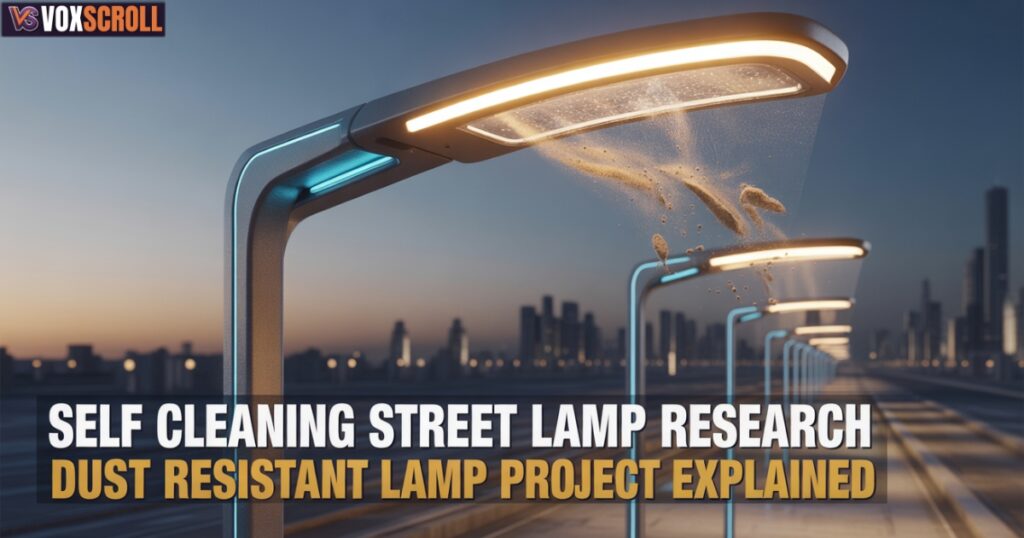
Self-cleaning street lamp research focuses on creating outdoor lighting that resists dirt, dust, and environmental damage while staying low-maintenance. The core objectives of the project include improving light output consistency, reducing maintenance, and increasing operational reliability in cities and harsh climates. By combining dust-resistant coatings and materials, automated cleaning, and embedded control systems, these lamps aim to redefine modern urban lighting solutions.
The project examines dust adhesion and surface engineering, mechanical and electronic components, and energy-efficient cleaning cycles to validate whether a scalable system can perform reliably. Researchers also use pilot lamp deployment to test environmental adaptability of lamps in real conditions. Academic and commercial studies are contributing to a research validation for dust-resistant systems, showing promising results for sustainable infrastructure solutions.
Read Also: Stephanie Maloney Katz: Big Cat’s Wife and Her Private Life
Why Dust Accumulation Makes Street Lamps Inefficient
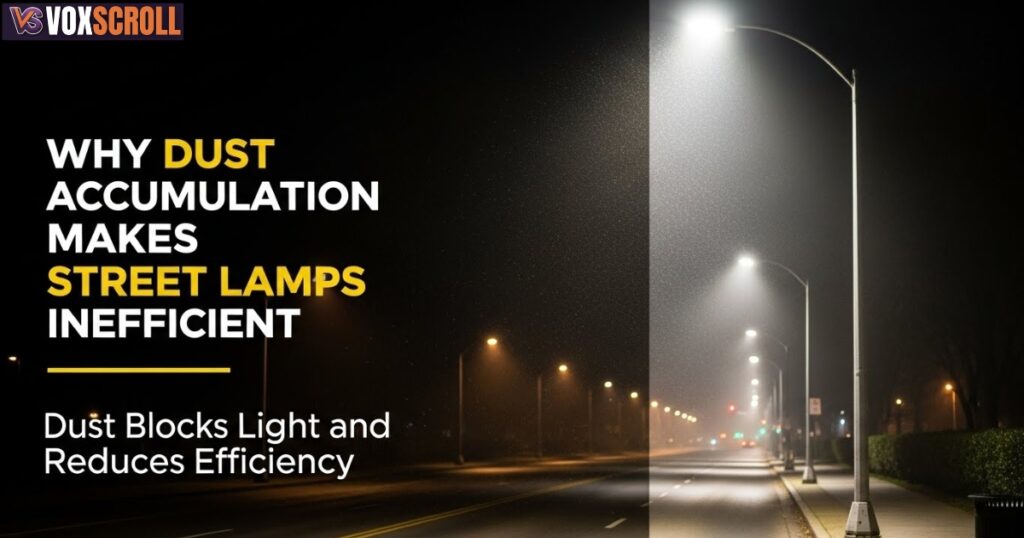
Dust as a problem for lamps significantly reduces light output, sometimes by 40%, impacting public safety and urban air pollution mitigation. Dust particles from construction, traffic, and desert winds coat lamps, making solar street lamp efficiency drop and increasing maintenance cost reduction needs.
The effect of dust is worse in deserts and arid climates, where heat and sand mitigation becomes crucial. Manual cleaning is expensive and inconsistent, leading to lower operational reliability in dusty conditions. Automatic dust reduction in street lamps ensures that high-lumen LED lighting remains effective, supporting safer streets and energy-efficient city infrastructure.
Core Technologies in Self Cleaning Street Lamp Research Dust Resistant Lamp Project Exist
The core technologies in dust-resistant lamps include hydrophobic and superhydrophobic coatings, nano-coating layers, and electrostatic dust removal. These methods prevent dust from sticking while ensuring dust accumulation prevention is effective over time. Advanced sensor-based control logic triggers self-cleaning mechanisms in street lamps when dirt levels exceed set thresholds.
Other technologies include hybrid smart cleaning systems and mechanical cleaning systems, which can combine vibration, rotation, and water-assisted cleaning. Embedded control systems monitor lamp health, adjust cleaning schedules, and optimize power and energy optimization. These technologies ensure sustainable urban lighting while reducing manual labor and improving solar street lamp efficiency.
How Self-Cleaning Street Lamps Work in Real Life
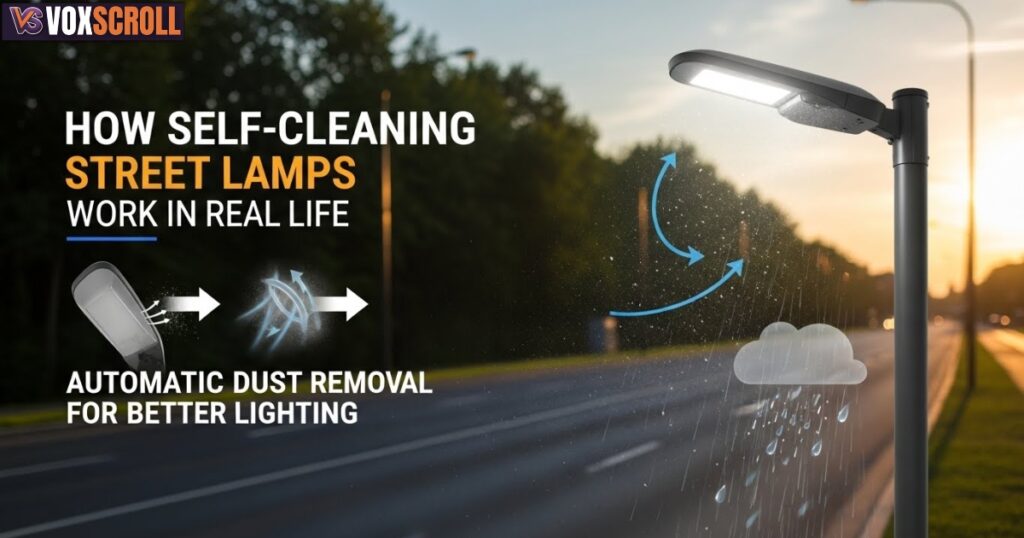
Self-cleaning mechanisms in street lamps rely on a combination of automated and sensor-based cleaning strategies. Environmental sensing and control detect dust density and lamp output, triggering energy-efficient cleaning cycles that use minimal electricity. Rainwater-assisted cleaning and vibration mechanisms help remove stubborn particles.
Real-world deployments use smart monitoring for outdoor lighting to track performance. Field testing in harsh environments ensures lamps remain functional despite desert winds or urban dust. Step-by-step implementation in smart lighting confirms the feasibility of scalability for urban deployment, proving that automatic cleaning is superior to manual methods.
Read Also: Nerwey Explained: 16 Powerful Insights You Must Know in 2025
Key Components of Self Cleaning Street Lamp Research Projects
Mechanical and electronic components form the backbone of these lamps. Sealed enclosures, motors, cleaning arms, and drainage systems combine with dust sensor technology, microcontrollers, and threshold-based cleaning algorithms for efficient operation. These mechanical cleaning systems ensure dust does not accumulate while battery longevity in extreme heat is preserved.
The software and firmware components include performance modeling and simulation, remote monitoring dashboards, and smart features integration. Together, they maintain operational reliability in dusty conditions while reducing labor and energy costs. Tools and techniques for research include environmental testing for dust and UV exposure, embedded programming, and IoT monitoring to optimize sustainable urban lighting solutions.
Existing Deployments of Dust-Resistant Street Lamps
Academic research on lamps shows pilot projects in universities and test cities in desert climates. These commercial and pilot deployments include solar-powered installations in smart cities and industrial areas, such as highways, airports, and municipal parks.
In harsh regions, these lamps handle desert environmental stressors on lamps, including sandstorms, extreme heat, and high UV exposure. Reports highlight automatic dust management vs manual cleaning, demonstrating energy savings and increased light performance. Operational reliability in dusty conditions confirms their potential for urban scalability.
Benefits of Self Cleaning Street Lamp Research Dust Resistant Lamp Project Exist
Benefits of self-cleaning street lamps include maintenance cost reduction, energy efficiency, and longer operational life. Automated cleaning ensures light output consistency, while dust-resistant coatings and materials extend durability. Urban areas benefit from smart city lighting solutions that maintain safe streets while lowering environmental impact.
Other advantages include sustainability, reduced labor costs, and the ability to support renewable energy goals (Saudi Vision 2030, UAE Net Zero 2050, Oman Vision 2040). The combination of solar-powered street lamps, high-efficiency solar panels, and long-life batteries reduces reliance on grid electricity, making sustainable infrastructure solutions more achievable.
Challenges and Limitations of Dust-Resistant Lamp Projects
The main challenges and limitations include balancing energy-efficient cleaning cycles with performance, adapting lamps to varied climates, and ensuring battery longevity in extreme heat. Overcomplex mechanical cleaning systems may fail under harsh conditions, reducing reliability.
Deployment costs are another limitation. Scaling pilot lamp deployment to city-wide use requires careful planning and budgeting. Researchers emphasize environmental adaptability of lamps and field testing in harsh environments to ensure success, while research validation for dust-resistant systems is critical before large-scale implementation.
Best Practices for Design, Testing, and Deployment
Design best practices involve using dust-resistant coatings and materials, sealed enclosures, and modular components. Testing best practices include simulating sandstorms, UV exposure, and evaluating light output consistency over time.
Deployment best practices recommend starting with pilot lamp deployment, collecting long-term performance data, and refining step-by-step implementation checklist. Ensuring operational reliability in dusty conditions is vital for sustainable urban lighting adoption.
Comparing Self-Cleaning Lamps With Traditional Street Lamps
Traditional lamps require frequent manual cleaning and show dust reduction in street lamps inconsistently. In contrast, self-cleaning lamps maintain brightness through automated cleaning, reducing labor costs and energy waste. Solar street lamp efficiency remains high even in dusty conditions, improving outdoor lighting reliability.
Performance comparisons show automatic dust management vs manual cleaning favors self-cleaning systems, offering better maintenance and operational cost savings. Long-term, these lamps outperform conventional options, providing sustainable infrastructure solutions in urban and desert climates.
Future Scope of Self Cleaning Street Lamp Research Dust Resistant Lamp Project Exist
Future research focuses on hybrid smart cleaning systems, AI-driven environmental sensing and control, and scalable urban deployment. Integration with smart IoT controls will allow cities to monitor lamp health and cleaning cycles remotely.
Other innovations include high-efficiency solar panels, long-life batteries, and smart features integration for energy optimization. The potential for sustainable urban lighting in harsh climates and regional sustainability initiatives suggests wide adoption globally.
Industry Perspective and Expert Opinions on Dust-Resistant Lamps
Experts agree that dust-resistant coatings and materials, sensor-based control logic, and performance modeling and simulation are essential for effective solutions. Smart city planners emphasize field testing in harsh environments and step-by-step implementation in smart lighting to ensure reliability and ROI.
Industry leaders foresee growth in solar street lights, industrial and municipal applications, and integration with aviation and highway lighting. Long-term adoption will improve maintenance and operational cost, enhance energy efficiency in harsh climates, and support sustainable urban lighting initiatives worldwide.
FAQs About Self Cleaning Street Lamp Research Dust Resistant Lamp Project Exist
1. Does Self Cleaning Street Lamp Research Dust Resistant Lamp Project Exist in real deployments?
Yes, pilot deployments and research prototypes exist in high-dust regions and smart city testbeds.
2. How effective are self-cleaning mechanisms in dusty environments?
Effectiveness ranges from 60% to 90% dust reduction depending on dust-resistant coatings and cleaning methods.
3. Is this technology suitable for solar street lamps?
Yes, it improves solar street lamp efficiency by keeping panels clean and maintaining light output consistency.
4. What is the biggest technical challenge?
Balancing automated cleaning effectiveness with energy-efficient cleaning cycles is the main challenge.
5. Can this project be scaled city-wide?
Scalability is possible after pilot lamp deployment and cost optimization using embedded control systems.
6. What skills are required to build this project?
Expertise in mechanical and electronic components, dust sensor technology, and performance modeling and simulation is needed.
7. What is the conclusion of the automatic street light project?
Self-cleaning, dust-resistant lamp research proves effective in reducing maintenance and enhancing outdoor lighting reliability.
8. What is the future of street lighting?
Smart, sustainable urban lighting with automated cleaning, IoT controls, and energy efficiency in harsh climates will dominate city infrastructure.

Welcome to VoxScroll! I’m an AI-Powered SEO Expert, and Content Writer with 3 years of experience.
I help websites rank higher, grow traffic, and look amazing. My goal is to make SEO and Web design Simple and effective for everyone.
Let’s Achive more together!