

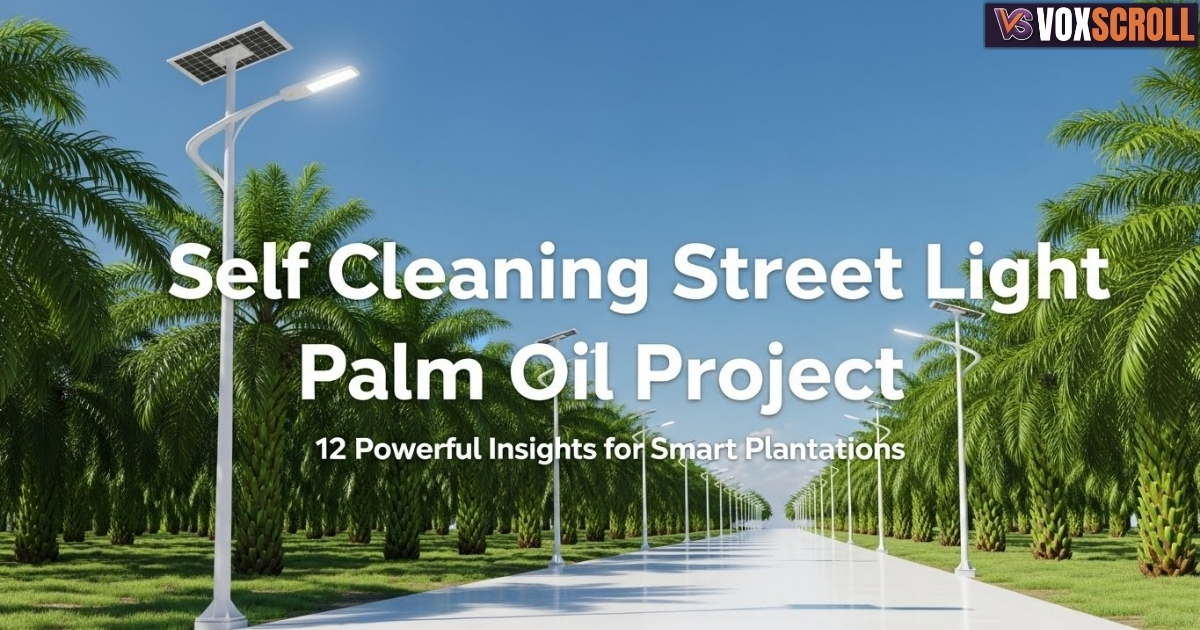
The Self Cleaning Street Light Palm Oil Project is transforming oil palm plantations by introducing smart, solar-powered lights that clean themselves automatically. In humid tropical environments, traditional plantation maintenance is costly and labor-intensive, as dust, oil mist, and rain reduce solar energy efficiency. By using automated PV cleaning systems, LED lamp fixtures, and LiFePO₄ batteries, these lights provide reliable plantation lighting while lowering energy costs and improving safety for workers.
This project also promotes sustainable agriculture lighting and reduces the carbon footprint of plantations. With IoT monitoring systems, plantation managers can track performance remotely, making operations more efficient and eco-friendly.
What Is the Self Cleaning Street Light Palm Oil Project?
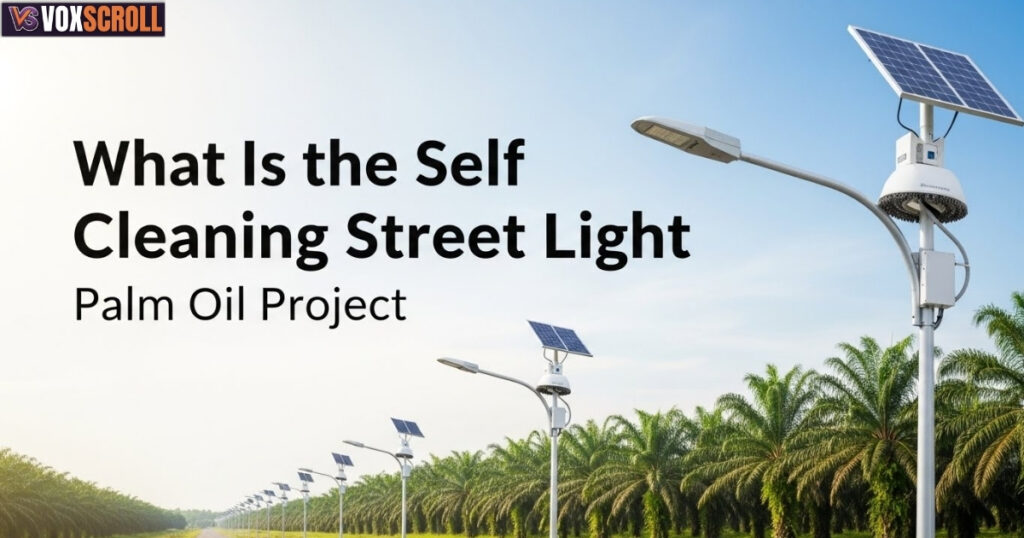
The Self Cleaning Street Light Palm Oil Project is an innovative initiative designed to modernize oil palm plantations with smart, solar-powered lights. These self-cleaning street lights are engineered to reduce plantation maintenance costs and improve energy-efficient lighting across plantation roads, worker housing, and processing areas. The project integrates automated PV cleaning systems, robotic cleaning arms, and hydrophobic coatings on solar panels, making them highly effective in humid tropical environments such as rural Malaysia and the Africa palm belt.
The main goal of the project is to enhance plantation safety lighting while promoting sustainable agriculture lighting. By using LiFePO₄ batteries, MPPT solar charge controllers, and LED lamp fixtures, the system ensures continuous operation even during cloudy or rainy periods. This approach combines renewable energy initiatives, biofuel energy from oil palm biomass, and energy storage batteries to deliver a reliable and eco-friendly solution. Through IoT monitoring systems and remote monitoring (4G/LoRa module), plantation managers can track solar panel efficiency, cleaning cycles, and overall operational efficiency in real-time.
Read Also: Warning About Tusehmesto: 17 Critical Facts You Must Know Before It Causes Serious Problems
Why Oil Palm Plantations Need Smart, Self-Cleaning Street Lights
Oil palm plantations face unique challenges. High humidity, frequent dust and oil mist, and heavy rainfall can coat solar panels, reducing solar energy efficiency. Traditional street lights demand constant maintenance, which raises costs and risks for workers. Self-cleaning solar street lights solve these problems by integrating automated robotic wipers, hybrid cleaning systems, and hydrophobic palm oil derivatives to repel dirt and water. This ensures consistent street illumination across plantation roads, worker housing, and processing areas, even in extreme conditions.
Moreover, modern palm oil plantation lighting supports energy-efficient lighting goals while boosting local community benefits. By installing LED community lamps, plantations reduce energy consumption, lower carbon footprint, and contribute to sustainable lighting practices. These systems also align with certified palm oil initiatives, ensuring ethical sourcing and promoting social impact of lighting for smallholder farmers and rural communities.
Core Components of a Self-Cleaning Solar Street Light
A self-cleaning solar street light comprises several essential components. The solar panel is treated with nanotechnology coatings or solar panel hydrophobic coating to reduce dust and oil mist removal issues. The LiFePO₄ battery stores energy efficiently, while the smart charge controller and MPPT technology optimize solar charging. LED lamp fixtures deliver bright, long-lasting illumination of 160–200 lm/W, and automated wipers or a robotic cleaning arm keeps the panel free of debris.
The structural elements often use galvanized steel, aluminum alloy, or Li-ion/bio-composite housing to resist corrosion in humid tropical environments. Ultrasonic vibration sensors and IoT monitoring systems track cleaning efficiency and energy usage. This setup enhances operational efficiency, plantation safety lighting, and reduces maintenance cost reduction significantly. A table below summarizes the core components:
| Component | Function | Example |
|---|---|---|
| Solar Panel | Captures sunlight | Hydrophobic coatings, anti-dust solar panels |
| LiFePO₄ Battery | Stores energy | Solar-powered storage |
| LED Lamp Fixture | Illumination | 160–200 lm/W LED |
| Robotic Cleaning Arm | Removes dust/mist | Automated PV cleaning system |
| Smart Charge Controller | Optimizes charging | MPPT solar charge controller |
| Housing | Protects system | Galvanized steel, Aluminum alloy |
How Self-Cleaning Street Lights Work: Technical Overview
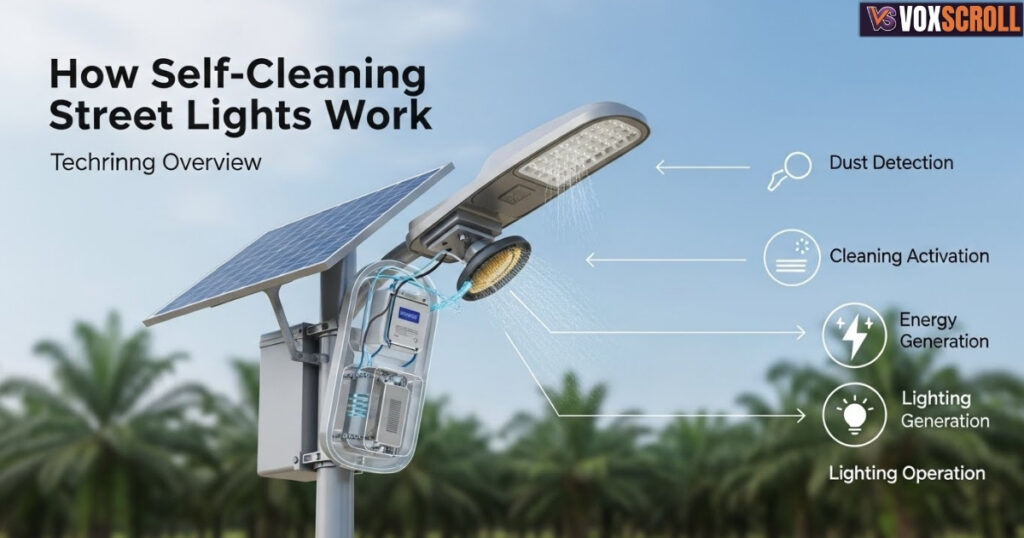
The self-cleaning street light uses an automated PV cleaning system controlled by smart street lighting technology. Sensors detect dirt, dust, and oil residue on solar panels, triggering mechanical brush or wiper systems. Some systems use ultrasonic vibration sensors or robotic cleaning arms to remove stubborn debris. Meanwhile, the LiFePO₄ battery stores energy for nighttime street illumination, ensuring consistent performance even during rainy seasons.
AI and IoT integration allows plantation managers to remotely monitor system status. A remote monitoring IoT interface tracks energy storage batteries, solar panel efficiency, and cleaning cycles. This ensures maintenance cost reduction while maintaining high solar energy efficiency and plantation lighting quality. The result is a sustainable lighting solution that enhances both operational efficiency and local community benefits.
Read Also: David Borhaz: 12 Powerful Facts About His Art, Innovation, Influence & Legacy
Project Planning and Installation in Palm Oil Regions
Planning a self-cleaning street light palm oil project begins with a detailed site assessment. Plantation managers must evaluate solar panel efficiency, road layouts, worker housing, and processing areas. Installation involves selecting 7–9 meters pole height, configuring BS-AIO-TL Series lamps, and integrating MPPT solar charge controllers with LiFePO₄ batteries. Tropical regions like Indonesia, Malaysia, or the Africa palm belt require additional protection against high humidity and rainfall using eco-friendly coatings and hydrophobic substances.
The installation process also considers operational efficiency and plantation safety lighting. Proper positioning improves street illumination, reduces shadows, and enhances visibility for night work. A clear maintenance plan ensures maintenance cost reduction over time. Plantations adopting self-cleaning solar street lights achieve higher solar panel efficiency, lower energy usage, and greater social impact of lighting for local communities.
Real-World Applications and Case Studies
Several plantations in Malaysia, Indonesia, and Southeast Asia have implemented self-cleaning street lights successfully. For example, a large plantation in rural Malaysia reported a 40% reduction in maintenance costs and a 25% increase in solar energy efficiency after installing BS-AIO-TL Series self-cleaning solar street lights. Worker safety improved due to better plantation safety lighting, and the local community benefits from LED community lamps installed near residential areas.
In Nigeria and Ghana, industrial estates used self-cleaning street lights powered by bio-composites and biomass-based energy from oil palm by-products. The project reduced carbon footprint, increased plantation lighting efficiency, and provided neighborhood lighting for surrounding communities. Case studies indicate that combining AI and IoT integration with automated robotic wipers ensures reliable performance in humid tropical environments and plantation roads, worker housing, processing areas.
Environmental and Social Benefits of the Project
The Self Cleaning Street Light Palm Oil Project supports environmental sustainability by reducing reliance on fossil fuels. Solar energy, renewable energy from waste, and oil palm biomass power the lights, cutting emissions and promoting carbon footprint reduction. Sustainable palm oil practices, including the use of hydrophobic palm oil derivatives and eco-friendly coatings, ensure plantations meet ethical sourcing standards while supporting sustainable technology adoption.
Socially, the project delivers local community benefits through LED community lamps, enhancing safety and reducing accidents at night. Plantation maintenance becomes more efficient, minimizing worker exposure to hazards. Adoption of self-cleaning street lights contributes to municipal cost savings, supports rural Malaysia and Southeast Asia communities, and drives sustainable urban lighting in nearby towns.
Overcoming Challenges in Harsh Plantation Environments
Oil palm plantations face harsh conditions including high humidity, rainfall, dust, and oil mist. To combat this, self-cleaning solar street lights use hydrophobic coatings, automated wipers, and mechanical brush systems. The combination of hybrid cleaning systems and LiFePO₄ batteries ensures lights stay operational while maintaining solar energy efficiency.
Design elements such as galvanized steel, aluminum alloy, and bio-composite housing resist corrosion and improve durability. IoT monitoring systems allow real-time tracking of light performance and cleaning effectiveness, ensuring operational efficiency while reducing maintenance cost reduction. These innovations make palm oil plantation lighting viable in humid tropical environments across Malaysia, Indonesia, and Africa palm belt.
Innovations Driving the Self-Cleaning Street Light Palm Oil Project
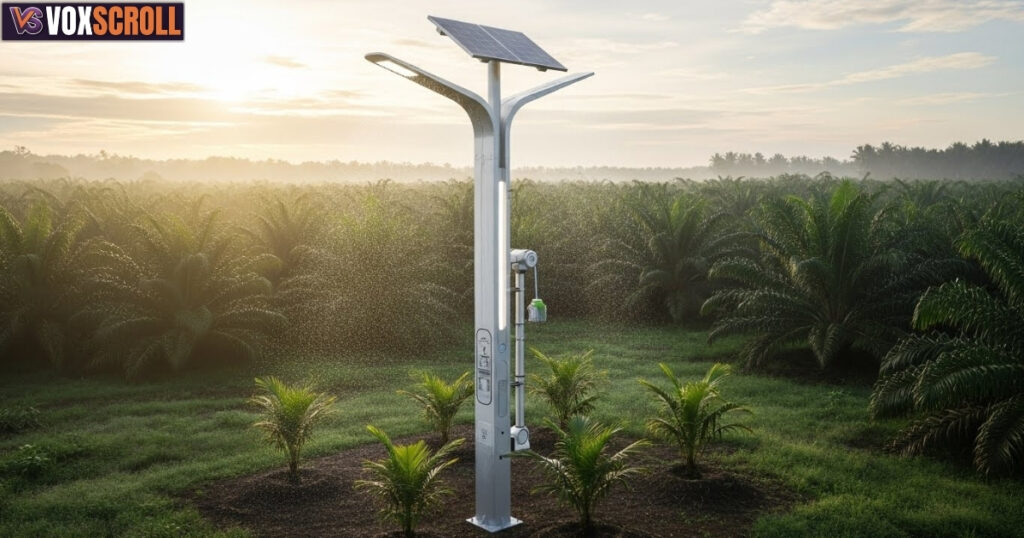
Recent smart lighting innovation combines AI and IoT integration, automated robotic wipers, and MPPT solar charge controllers to maximize solar panel efficiency. Hydrophobic substances, eco-friendly coatings, and nanotechnology coatings ensure panels stay clean and functional. Energy storage batteries like LiFePO₄ optimize nighttime street illumination while minimizing energy waste.
Smart street lighting technology also integrates with plantation operations, improving operational efficiency and reducing human labor. The combination of sustainable technology adoption, LED light sources, and renewable energy initiatives from oil palm by-products supports carbon-neutral materials and drives eco-friendly energy solutions in palm oil plantations.
Read Also: Kathleen Nimmo Lynch Celtics Story: Truth Behind the 2022 NBA Scandal
Broader Impact and Global Reach
The Self Cleaning Street Light Palm Oil Project is expanding beyond Southeast Asia into industrial estates and urban smart lighting in Africa and Latin America. Its adoption reduces reliance on fossil fuels and promotes circular economy practices by utilizing oil palm by-products for biomass-based energy. Renewable materials and sustainable lighting solutions further enhance global sustainability goals.
Plantations adopting self-cleaning solar street lights contribute to municipal cost savings, social impact of lighting, and sustainable agriculture lighting. Countries like Nigeria, Ghana, and Malaysia are reporting higher operational efficiency and improved local community benefits, showing that plantation lighting can be both eco-friendly energy solutions and economically advantageous.
Best Practices and Recommendations for Plantation Owners
Plantation owners should ensure solar panel efficiency with proper hydrophobic palm oil derivatives and eco-friendly coatings. Lights should be spaced correctly on plantation roads, worker housing, and processing areas to ensure maximum street illumination. Regular checks on LiFePO₄ batteries, LED lamp fixtures, and robotic cleaning arms improve plantation maintenance and maintenance cost reduction.
Integrating remote monitoring IoT systems allows plantation managers to track energy usage, panel cleaning, and overall solar energy efficiency. Best practices include using MPPT solar charge controllers, automated robotic wipers, and AI-powered cleaning schedules. Combining sustainable technology adoption, ethical sourcing, and social impact of lighting ensures long-term success in oil palm plantations.
FAQs About Self Cleaning Street Light Palm Oil Project
1. What is the Self Cleaning Street Light Palm Oil Project?
The Self Cleaning Street Light Palm Oil Project installs solar-powered, automated lights in plantations to improve energy efficiency and reduce maintenance.
2. Can the Self Cleaning Street Light Palm Oil Project operate in remote plantations?
Yes, with IoT monitoring systems and remote control, the project works efficiently even in rural Malaysia and other palm-oil producing regions.
3. How to make an automatic street light project?
Combine solar panels, LED lamp fixtures, LiFePO₄ batteries, and a smart charge controller, then add automated cleaning systems and sensors for IoT monitoring.
4. What is the conclusion of the automatic street light project?
Automatic street lights reduce maintenance, save energy, and improve safety while promoting sustainable lighting in plantations and urban areas.
5. What is the street light project?
A street light project installs lighting systems, often solar-powered, to illuminate roads, plantations, or communities efficiently.
6. Can street lights be solar powered?
Yes, solar-powered lights use photovoltaic panels to store energy in batteries and provide energy-efficient lighting without grid dependency.
7. What is the 33% rule in solar panels?
The 33% rule recommends that solar panels should not exceed 33% of battery capacity to ensure efficient charging and energy storage.
8. What are the disadvantages of solar street lights?
They depend on sunlight, may require high initial costs, and can underperform in high humidity and heavy rainfall if not properly maintained.

Welcome to VoxScroll! I’m an AI-Powered SEO Expert, and Content Writer with 3 years of experience.
I help websites rank higher, grow traffic, and look amazing. My goal is to make SEO and Web design Simple and effective for everyone.
Let’s Achive more together!