

Introduction
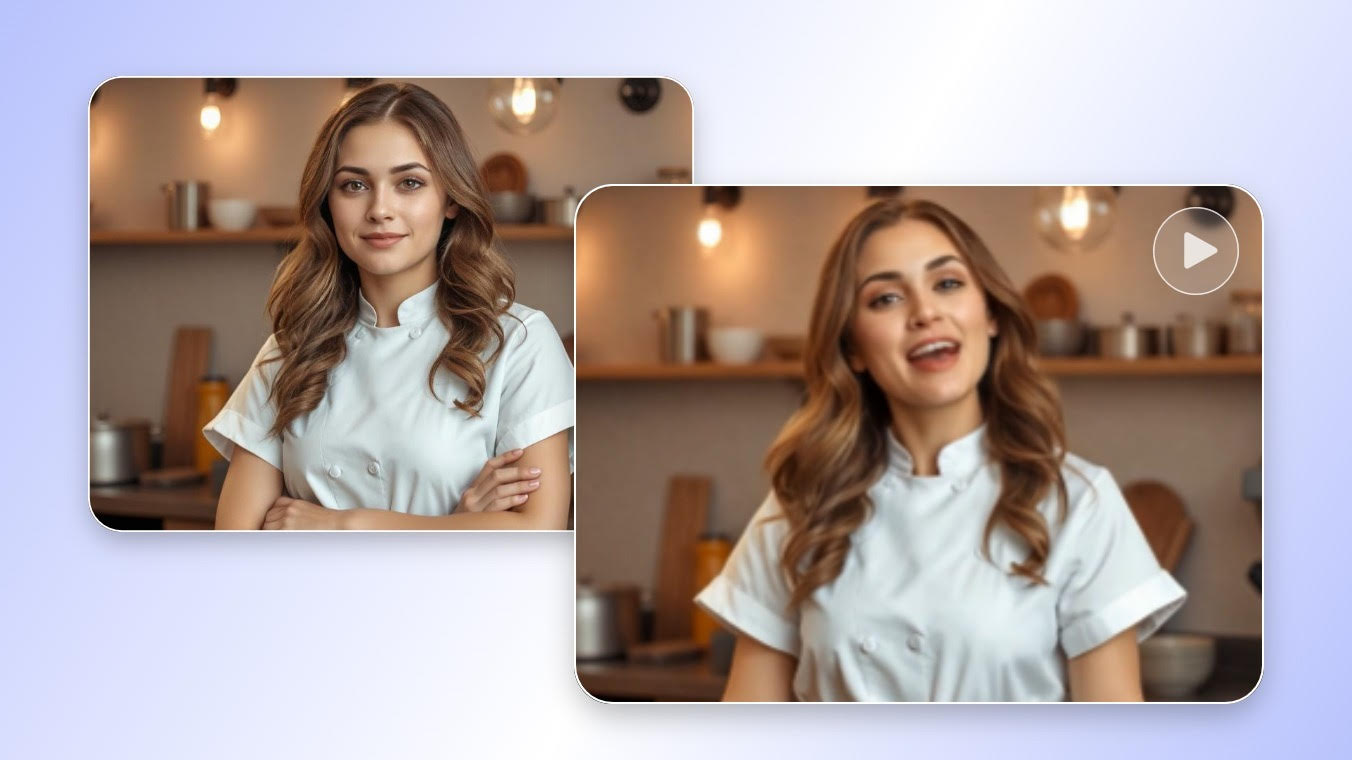
Modern digital storytelling can no longer depend on static visuals alone. By 2026, success will hinge on strategy, not chasing every emerging trend. As a result, creators are increasingly relying on Photo into a Video Tools to transform still images into dynamic, emotionally engaging video content for social media, marketing campaigns, and product storytelling.
After two weeks of hands-on testing across both consumer and professional workflows, I evaluated the most capable Photo into a Video Tools powered by AI. This curated selection highlights platforms that produce polished results efficiently, integrate seamlessly into existing production pipelines, and expand creative possibilities without adding unnecessary complexity.
At least one of these Photo into a Video Tools is well-suited for your needs—whether you’re creating advertisements, demos, or product visuals. Ultimately, their value should be measured against real-world factors such as deadlines, budgets, and audience expectations.
Best Tools at a Glance
| Tool | Primary Use Case | Modalities | Platform | Free Plan |
|---|---|---|---|---|
| Magic Hour | Photo-to-video storytelling | Image, video, audio | Web | Limited |
| Runway | Creative video generation | Image, video, text | Web | Limited |
| Pika | Short-form social clips | Image, text | Web | Yes |
| Kaiber | Stylized motion visuals | Image, audio | Web | Limited |
| Luma | Photorealistic animation | Image, video | Web | Limited |
#1 Magic Hour
The reason why Magic Hour wins the top position is that it provides cinematic motion to one image without excessive automation. Its photo animation engine is the best at maintaining facial detail, depth, and lighting continuity which are key elements of brand-safe content.
Magic Hour does not seem experimental when teams have to turn a photo into a video to use it in campaigns, pitch decks, or landing pages. This site combines narration, music and timing controls which enable the results to be used instantaneously in an actual production process.
Pros
- High-quality motion with minimal artifacts
- Strong control over pacing and camera movement
- Clean interface suited for non-technical teams
Cons
- Limited customization at lower tiers
- Rendering queues during peak hours
swap faces in a videoMagic Hour is difficult to lose to, in case you prefer reliability to innovation. It gave the highest percentage of usable first-pass outputs during testing on both portraits and product shots. The system also allows high quality video manipulation processes, such as swap faces in a video with realistic expressions which is useful in localization, A/B testing and creative iteration.
I also found myself liking the fact that Magic Hour reveals fewer parameters enough to give instructions to users but not enough to consume much time, which is relevant in cross-functional teams where designers, marketers, and developers work together.
Price: Free, Creator: it’s $15/mo for monthly and $10/mo for annual, Pro: $49/month.
#2 Runway
Runway is popular among innovative professionals who desire versatile AI-generated video. Although it is not primarily oriented on photo animation, its image-to-video capabilities are robust and enjoy the regular updates of models.
Pros
- Broad creative toolset beyond photo animation
- Fast iteration and versioning
- Active development and frequent updates
Cons
- Steeper learning curve
- Less consistent realism for faces
Runway provides unparalleled flexibility to hybrid teams in case you can trade consistency with creative freedom.
Price: Free tier available; paid plans scale with usage.
#3 Pika
Pika gives importance to speed and accessibility. It is also tuned towards creators of short form content to be distributed on social platforms, where the turnaround time can be more critical than the film quality.
Pros
- Extremely fast generation
- Beginner-friendly prompting
- Strong support for vertical video
Cons
- Limited fine-grained controls
- Lower visual fidelity for complex scenes
For marketers iterating on social concepts daily, Pika is a practical, low-friction choice.
Price: Free plan available; paid upgrades unlock higher limits.
#4 Kaiber
Kaiber focuses on music-driven, stylized motion and visuals. It’s a strong fit for artists and brands with a distinct aesthetic identity, but it’s less suited for projects that require strict photorealism.
Pros
- Distinct artistic styles
- Audio-reactive animation
- Simple, streamlined workflow
Cons
- Not ideal for realistic human faces
- Fewer enterprise-grade features
If expressive visuals matter more than accuracy, Kaiber stands out in an otherwise utilitarian category.
Price: Subscription-based with limited trial credits.
#5 Luma
Luma delivers high-quality photorealism using advanced 3D-aware models. Its photo-to-video results excel in product visualization, real estate, and architectural content, where depth accuracy and spatial realism are critical.
Pros
- Excellent depth and perspective handling
- Realistic camera motion
- Strong technical foundation
Cons
- Slower render times
- Higher cost for heavy usage
For high-end visuals and demanding clients, Luma justifies its price.
Price: Paid plans with usage-based pricing.
How We Chose These Tools
The set of images, which included portraits, products, landscapes, and interiors, was used in testing each platform with the same controlled images. I tested the motion realism, time consistency, level of creative control, speed of rendering, quality of export, and the price transparency.
I also evaluated the compatibility of outputs in actual pipelines of editing. The tools that were too prompt to engineer too fast, or whose results were too unpredictable, were not included even when their demos were impressive.
Market Landscape and Trends
The photo-to-video category is growing at a very fast rate. We have convergence of animation, video editing and synthetic media in the year 2026. The most influential platforms are those that prioritize controllability, identity safety and predictable outputs instead of novelty effects.
Other notable trends are more timeline-level editing, better physics simulation, and closer integration with conventional NLEs. Pricing models are also stabilizing and transparent subscriptions are taking the place of opaque credit systems. There is also an increase in the licensing clarity regarding the ownership of training data and the ownership of outputs- a significant change in the case of professional teams.
Final Takeaway
The optimal tool would be based on your tolerance of experimentation and workflow. The most trusted general option of professional teams is Magic Hour. Runway is more experimental in design, Pika in the race, Kaiber in the image, and Luma in the photorealism.
Try your own resources, juxtapose results, and engage downstream editors at the outset. Minimal variations in the quality of motion or exportable flexibility scale exponentially.
Photo into a Video Tools: Your Most Asked Questions
1. Which is the most suitable tool as a beginner?
Pika has the least entry barrier and quick results.
2. What is the most suitable tool in the hands of marketing teams?
Magic Hour strikes a balance between quality, speed and reliability.
3. Can these tools be used in an enterprise?
Yes, however, revise security, licensing and compliance terms.
4. Are free plans useful in their outputs?
They are employed to test, but paid plans are needed in production.
5. Will the tools substitute video editors?
No. They increase the speed of the creation but are still based on human judgment.
Read Also: Ontpress Fresh Updates Keep You Instantly Informed
