

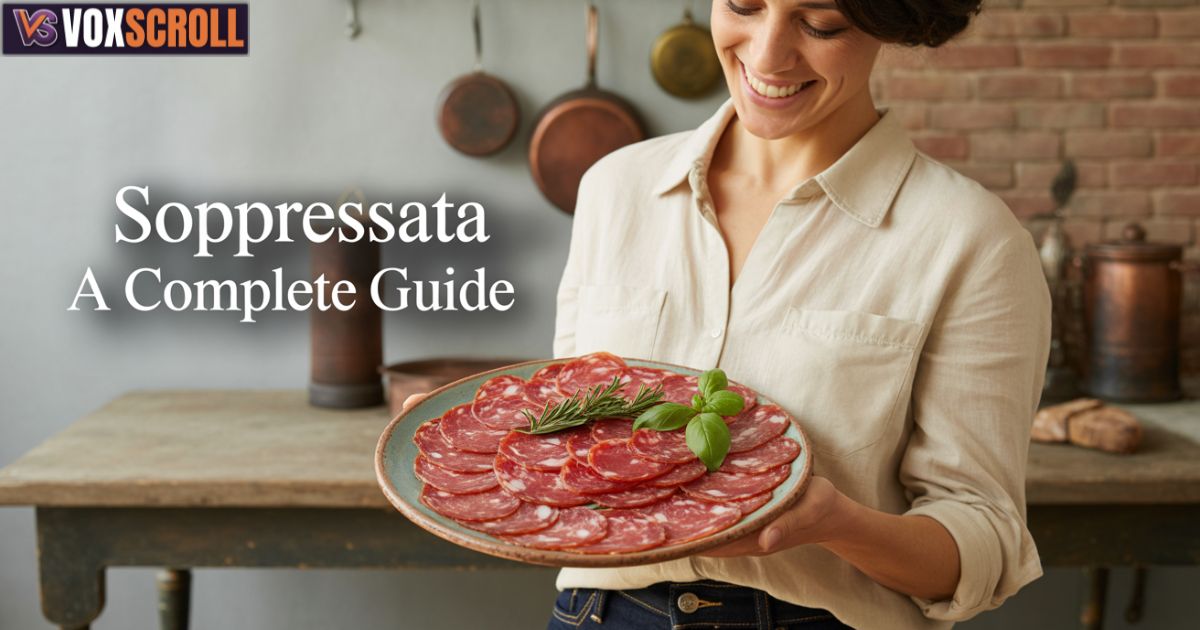
Soppressata is one of the most beloved Italian cured meats, cherished both in Italy and across the United States. This flavorful delicacy is a type of dry-cured pork salami that has been enjoyed for centuries, especially in southern Italian kitchens where family traditions keep the art alive. Its signature flattened salami shape makes it instantly recognizable, while the mix of spices and slow curing process gives it a rich taste that is both rustic and refined.
Whether sliced thin on a charcuterie board, layered into a soppressata sandwich, or added as a gourmet pizza topping, Soppressata remains a timeless favorite for casual meals and elegant dining alike.
What Is Soppressata?
Soppressata is a type of Italian salami, yet it stands apart. Unlike the cylindrical salamis most Americans know, Soppressata has a flattened salami shape that comes from being pressed. The name itself is linked to this unique process, sometimes called pressed salami Italy. Traditionally, Soppressata is crafted using pork shoulder cuts and lean ham cuts, blended with garlic seasoning, dried chili peppers, and often a splash of wine.
What makes Soppressata fascinating is its dual identity. In regions like Calabria and Basilicata, you find spicy and robust forms, while in Tuscany and Liguria, you taste milder varieties such as Tuscan soppressata and Liguria salami. Each type reflects the soul of southern Italian food and the Venetian culinary tradition, making it more than just a snack—it is a journey across Italy.
History and Origin of Soppressata
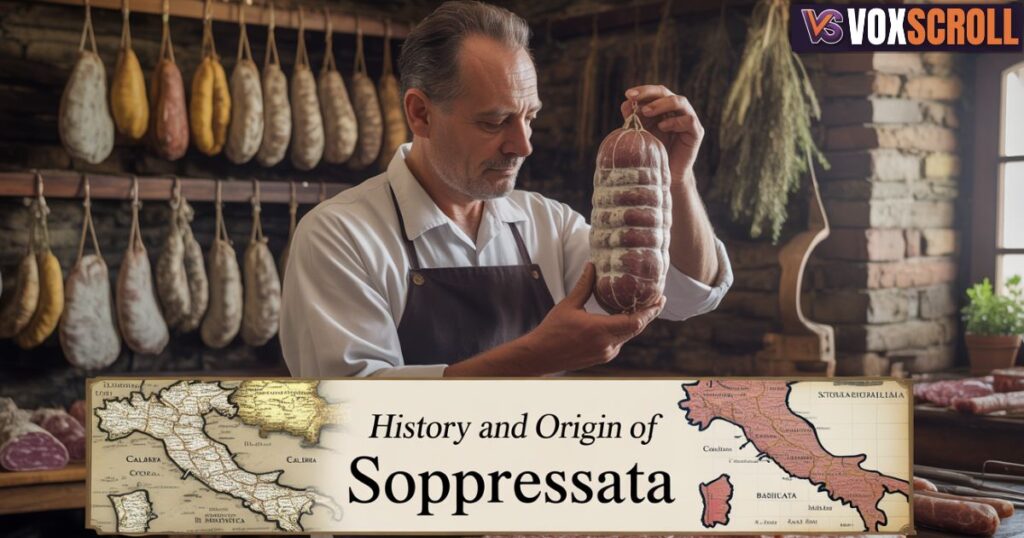
Soppressata has ancient roots. In rural areas of southern Italy, families practiced pig slaughter traditions, ensuring no part of the animal went to waste. Some parts became traditional pork products like Soppressata, sometimes even enhanced with prosciutto. This practice was common in local Italian rural towns, where Soppressata symbolized resourcefulness and survival.
Over time, certain regions gained fame. Soppressata di Basilicata, Soppressata di Calabria, and Soppressata di Puglia became recognized as benchmarks of quality. Today, Calabria PDO soppressata and Calabria soppressata DOP enjoy protected geographical status, safeguarding authenticity. Organizations like the Consorzio di Tutela della Soprèssa Vicentina DOP were formed to protect Sopressa vicentina, ensuring consumers taste genuine heritage.
Trending Topic: Levapioli: A Complete Guide to the Balkan Culinary Treasure
Soppressata vs. Salami – Key Differences
At first glance, Soppressata may look like regular salami, but a closer look reveals the truth. A standard salami is cylindrical, finely ground, and uniform. Soppressata is different, with a flattened salami shape, created by using a wood press for salami. This pressing defines its character and lends a unique texture.
When discussing Soppressata vs salami comparison, taste plays a role too. Soppressata is often spicier and crafted with coarsely ground pork shoulder, loin, ham scraps, while traditional salami uses finer grinds. American fans often describe Soppressata as bold, earthy, and rustic—qualities that appeal to lovers of cured meat traditions.
Ingredients Used in Soppressata
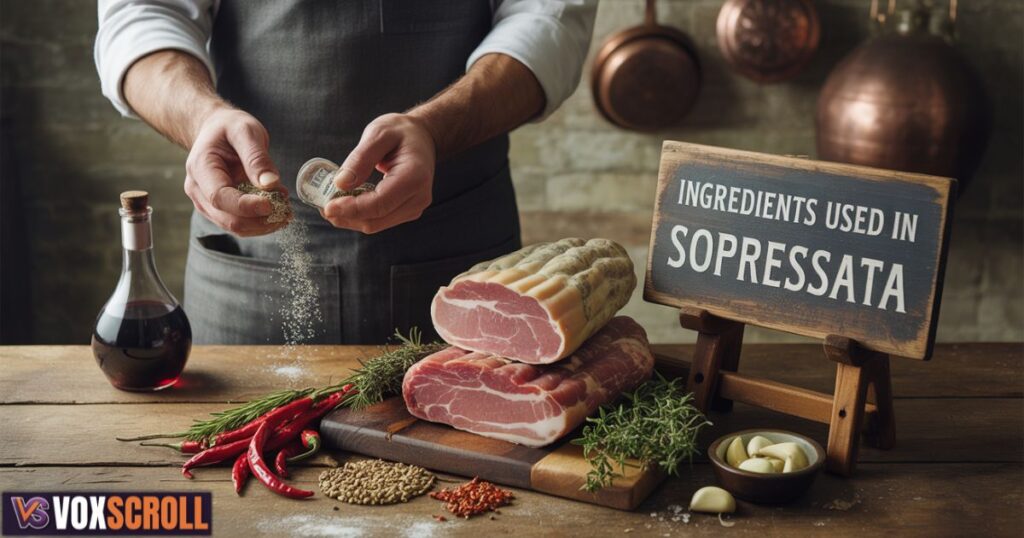
At its heart, Soppressata uses simple but powerful ingredients. The base is pork shoulder cuts or lean ham cuts, sometimes mixed with scraps to create that authentic rustic feel. To this, producers add garlic, cinnamon, clove, black peppercorn and dried chili peppers, ingredients deeply tied to southern Italian kitchens.
Regional recipes add their own flair. Some families use rosemary, cinnamon, and chile peppers, while others experiment with pink peppercorns. In modern artisan shops, even Chardonnay in salami curing appears, creating vibrant layers of taste. These variations in family recipes are what keep Soppressata so unique across Italy and now the USA.
Trending Topic: Koriandri: 10 Amazing Benefits & Complete Guide
How Soppressata Is Made (Traditional & Modern Methods)
Traditional Soppressata relies on patience and skill. Meat is ground, mixed with spices and wine, and carefully stuffed into a natural or synthetic casing. Then comes the pressing. A wood press for salami or heavy planks are used to create the signature shape. After this, Soppressata is dried for weeks, developing bold sweet and spicy notes in salami.
Modern producers combine old methods with technology. Artisanal salami recipes in the USA often follow traditional guidelines but in climate-controlled rooms for safety. Some even use advanced machinery, yet many still celebrate the charm of cured meat traditions, balancing authenticity with modern quality standards.
Different Varieties of Soppressata (Sweet, Spicy, Regional Styles)
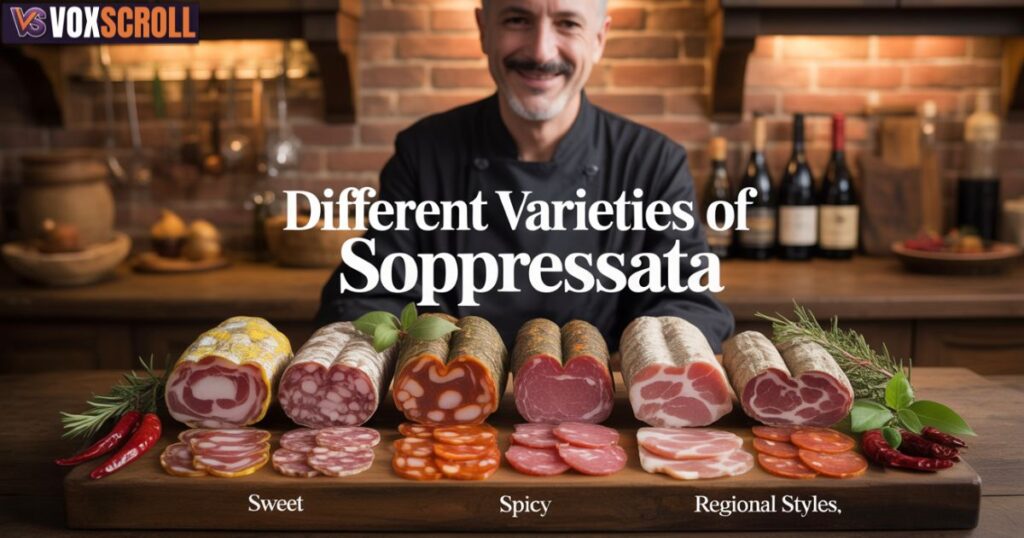
Italy is home to countless Soppressata varieties. Soppressata di Calabria is fiery, seasoned with Calabrian chili paste soppressata. Basilicata soppressata and Puglia soppressata carry their own rustic tones, while Abruzzo soppressata and Campania soppressata offer regional twists. Each one reflects its geography and people.
Northern Italy tells another story. Sopressa veneta and Sopressa vicentina are rooted in the Venetian culinary tradition. Unlike the southern versions, they are milder, sometimes using fewer spices but celebrated for their balance. This regional richness means Soppressata is never just one flavor—it is a tapestry of Italian identity.
Trending Topic: Pravi Celer: 10 Powerful Benefits You Must Know
Nutritional Value and Health Aspects
Soppressata is rich in protein and flavor, but also high in fat and sodium. A typical serving provides around 80–100 calories, with about 7 grams of protein. These numbers vary based on whether it is a spicy red wine cured salami or a milder Tuscan sopressa.
Health-wise, Soppressata should be enjoyed in moderation. It is a powerhouse of lean pork with lard texture, combining richness and taste. For health-conscious eaters, pairing Soppressata with fresh vegetables or whole-grain bread balances indulgence with nutrition, making it fit within a mindful diet.
How To Store Soppressata Properly
Whole Soppressata keeps well in a cool, dry pantry. Once sliced, however, storage becomes critical. Experts recommend parchment paper storage rather than plastic wrap, which allows the meat to breathe. In the refrigerator, sliced Soppressata can last about three weeks without losing too much flavor.
Freezing is another option, but it may alter the lean pork with lard texture slightly. For the best flavor, store it as Italians do, wrapped and hung in cool spaces, letting time deepen the taste. Proper storage is the difference between an average bite and the perfect soppressata sandwich.
Best Ways To Serve and Pair Soppressata
Soppressata shines when shared. In the USA, it is a favorite for charcuterie board soppressata, where it pairs with sharp cheeses and bold wines. A crisp Chianti or bold Cabernet complements its richness. For meals, Soppressata transforms into a pizza topping soppressata or adds character when baked into focaccia with soppressata.
Beyond tradition, Soppressata can elevate casual meals with soppressata. Toss it in pasta, fold it into an omelet, or snack on it with olives. Its adaptability makes it just as fitting for an elegant dinner party as for a relaxed Sunday brunch.
Famous Brands and Regional Specialties (e.g., il porcellino salumi)
In Italy, regions proudly protect their brands. Sopressa di Vicentina is iconic, tied to its region’s protected geographical status. The Consorzio di Tutela della Soprèssa Vicentina DOP ensures that only true regional Soppressata carries this respected name.
In America, producers such as il porcellino salumi soppressata have earned a reputation for authenticity. Combining artisanal salami recipes with American creativity, these makers bring Italian tradition to the USA. Their use of Calabrian chili paste soppressata and fine wines mirrors old-world methods, but with a modern twist.
FAQs About Soppressata
Q1: What is Soppressata and why is it famous?
Soppressata is a traditional Italian cured meat made from pork, seasoned with herbs and spices, then dry-cured. It’s famous for its bold flavor, unique flattened shape, and strong cultural roots in southern Italy.
Q2: How is Soppressata different from regular salami?
The main difference is in preparation and texture. Soppressata is pressed, giving it a flatter shape, and it often includes regional spices like Calabrian chili. Regular salami, on the other hand, is usually round and less intensely flavored.
Q3: What are the main varieties of Soppressata?
Popular types include Soppressata di Calabria (PDO-protected), Soppressata di Basilicata, Soppressata di Puglia, and Tuscan soppressata. Each region adds its own spices and curing traditions, making every variety unique.
Q4: How should Soppressata be stored for freshness?
To keep Soppressata fresh, wrap it in parchment paper, store it in a cool dry place, or refrigerate it. Avoid plastic wrap as it traps moisture and can spoil the flavor.
Q5: What dishes can you make with Soppressata?
Soppressata pairs well on charcuterie boards, sandwiches, pizza, and pasta. It’s also perfect with cheese, wine, and focaccia, making it versatile in both casual and gourmet meals.
Conclusion – Why Soppressata Remains a Timeless Italian Delicacy
From southern Italian kitchens to American markets, Soppressata continues to tell a story of family, tradition, and flavor. Its many varieties—from fiery Calabria soppressata to balanced Veneto sopressa—offer something for every palate.Today, whether served as a soppressata sandwich, enjoyed on a charcuterie board soppressata, or celebrated by artisans like il porcellino salumi soppressata, it remains proof that food can be both heritage and joy. This is why Soppressata is not just cured meat—it is a timeless delicacy.

Welcome to VoxScroll! I’m an AI-Powered SEO Expert, and Content Writer with 2 years of experience.
I help websites rank higher, grow traffic, and look amazing. My goal is to make SEO and Web design Simple and effective for everyone.
Let’s Achive more together!