

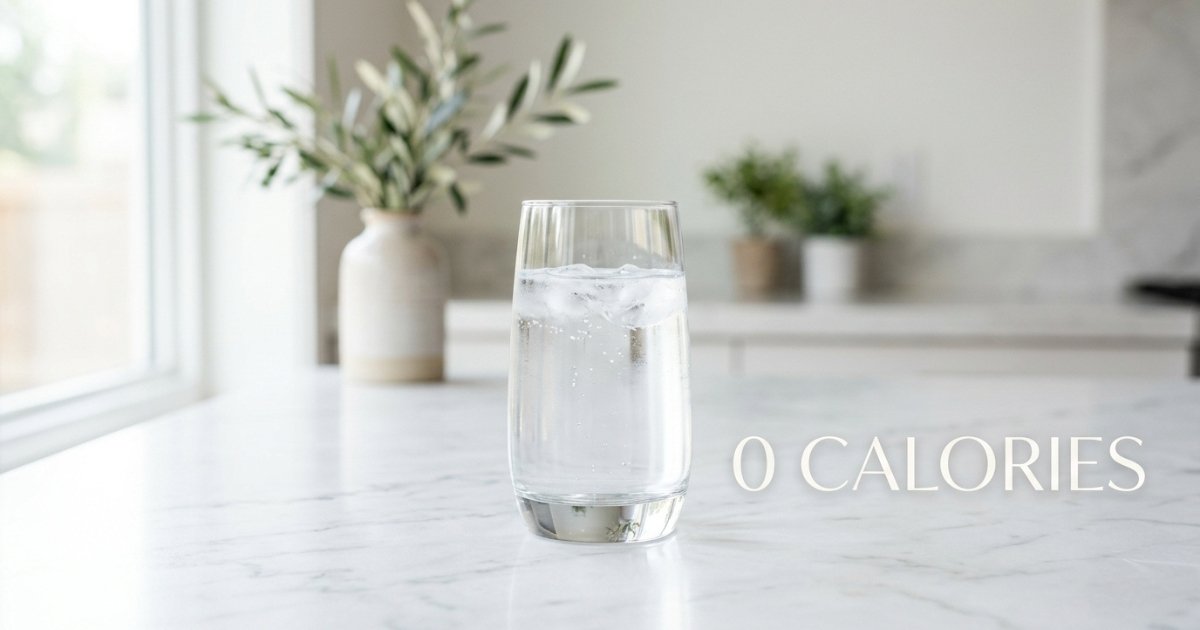
Plain water has zero calories.
According to the USDA FoodData Central database, pure water contains no carbohydrates, protein, fat, or alcohol — the only sources of dietary energy. This applies to tap water, spring water, mineral water, filtered water, distilled water, and unsweetened sparkling water. One cup, one bottle, or one gallon of plain water delivers exactly 0 calories.
Understanding this fact helps people make better hydration and weight-management choices, especially in the United States where sugary drinks remain a major source of added calories.
Why Water Has Zero Calories

Calories measure the energy your body can extract from food and beverages. That energy comes only from three macronutrients: carbohydrates, protein, and fat (plus alcohol).
Water is a simple molecule made of two hydrogen atoms and one oxygen atom (H₂O). It contains none of those energy-providing nutrients. Your digestive system cannot break water down into usable fuel the way it processes food.
Trace minerals sometimes found in water — such as calcium, magnesium, potassium, or sodium — are micronutrients. They support health but contribute no calories. Fluoride added to many U.S. municipal water supplies also adds zero calories.
Temperature does not change this. Cold water, room-temperature water, hot water, or boiling water all remain at zero calories. Heating or cooling water only changes its physical state; it does not add macronutrients.
Calories in Different Types of Water
Not every product labeled “water” is calorie-free. Here is a clear breakdown based on typical U.S. products:
| Water Type | Calories per 8 oz | Calories per 16.9 oz Bottle | Notes |
|---|---|---|---|
| Plain tap, spring, mineral, filtered, distilled | 0 | 0 | Truly calorie-free |
| Unsweetened sparkling water | 0 | 0 | Usually zero |
| Tonic water | ~32–40 | ~68–85 | Often sweetened with sugar |
| Sweetened flavored water | 0–60 | 0–120 | Check label |
| Vitamin water | ~50 | ~100–110 | Contains sugar or sweeteners |
| Coconut water | ~45–50 | ~95–100 | Natural sugars |
| Sports drinks | ~50 | ~100–110 | Electrolytes + sugar |
| Fruit juice | ~110 | ~220+ | High in natural sugars |
Always read the Nutrition Facts label. The FDA allows products with fewer than 5 calories per serving to be labeled “zero calorie,” but some flavored options exceed that threshold.
Common Myths About Water and Calories
Myth 1: Hot water has calories.
False. Heating water does not create energy your body can use. Hot water remains at zero calories.
Myth 2: Mineral water or “hard” water has calories because of minerals.
False. Minerals are not calorie sources. Even water high in calcium or magnesium stays at zero calories.
Myth 3: Drinking cold water burns significant calories.
Your body uses a very small amount of energy to warm cold water to body temperature, but the effect is minor (roughly 8–10 calories for a large glass of ice water). It is not a meaningful weight-loss strategy on its own.
Myth 4: Boiling water adds calories.
False. Boiling changes temperature only. The caloric value stays at zero.
Does Drinking Water Help With Weight Loss?
Plain water itself does not burn fat or magically reduce body weight. However, it supports weight management in practical ways:
- It replaces higher-calorie beverages such as soda, sweetened coffee drinks, juice, and sports drinks.
- It helps people feel fuller, which can reduce overall calorie intake at meals.
- Adequate hydration supports metabolism and physical performance, especially when combined with healthy daily routines.
Research consistently shows that people who replace sugary drinks with plain water tend to consume fewer calories overall. For most adults in the U.S., this simple swap is one of the easiest evidence-based habits for calorie control.
How Much Water Should You Drink?

There is no single perfect number that fits everyone. The National Academies of Sciences, Engineering, and Medicine suggest roughly 3.7 liters (about 125 ounces) of total water per day for men and 2.7 liters (about 91 ounces) for women from all beverages and foods combined.
Individual needs vary with activity level, climate, health conditions, and body size. A practical guideline many health professionals use is to drink when you feel thirsty and to aim for pale yellow urine as a rough hydration marker. People with certain medical conditions (kidney disease, heart failure, or specific medications) should follow personalized advice from a doctor or registered dietitian.
When Water Can Contain Calories

The moment anything caloric is added, the drink is no longer pure water. Common examples include:
- Sugar, honey, or syrup
- Fruit juice or purees
- Milk or cream
- Protein powders
- Alcohol
Even small additions matter over time. A few tablespoons of juice in a large bottle can add 20–40 calories. Checking labels remains the most reliable way to know exactly what you are drinking.
Practical Tips for Staying Hydrated With Zero-Calorie Water
- Keep a reusable bottle nearby throughout the day.
- Add natural flavor without calories by using cucumber, lemon, lime, mint, or berries (the fruit pieces contribute negligible calories if not consumed in large amounts).
- Choose unsweetened sparkling water if you prefer carbonation.
- In restaurants, request water instead of automatically accepting sugary fountain drinks.
- Track intake if you struggle to drink enough — many people simply forget. For more wellness ideas, explore our Style & Wellness section.
Frequently Asked Questions
Does sparkling water have calories?
Unsweetened sparkling water has zero calories. Flavored or sweetened versions may contain calories — always check the label.
Does water have calories after boiling or freezing?
No. Temperature changes do not add calories.
Can drinking water help me lose weight?
It can support weight loss when it replaces higher-calorie drinks and helps control appetite, but it is not a fat-burning miracle.
Is mineral water better than tap water for calories?
Both have zero calories. The difference is mineral content and taste, not energy.
Do electrolytes in water add calories?
Most electrolyte powders or tablets designed for hydration are low- or zero-calorie, but some sports formulations contain sugar. Read the nutrition information.
Bottom Line
Pure water has zero calories. This fact has not changed and remains true in 2026. It is one of the simplest, most effective tools for hydration and calorie control available.
Choose plain water most of the time, read labels on anything marketed as “enhanced” or “flavored,” and use water as a direct replacement for sugary beverages. That single habit delivers clear benefits for both health and weight management without any downside from calories.
Stay hydrated with the real thing — it costs nothing in calories and supports nearly every system in your body.

Welcome to VoxScroll! I’m an AI-Powered SEO Expert, and Content Writer with 3 years of experience.
I help websites rank higher, grow traffic, and look amazing. My goal is to make SEO and Web design Simple and effective for everyone.
Let’s Achive more together!